
Tico Braun changes lives. His passion, his intellect, and his commitment to teaching is legend. I have seen how students have changed after they finished taking one of his classes. He changed the way I viewed Colombia, his native country, with his memoir that is also a historical overview of the issues that plagued the country two decades ago: Our Guerrillas, Our Sidewalks. He has received the top teaching award at his University. What follows is a speech he delivered to students to get them to see the world with different eyes. I think after you read this you will see things differently too.
*******************************************************************************
About
the lives of others[1]
Herbert Tico Braun
Department of
History
“Look Hoos Talking”
University Student
Council
Old Cabell
Hall/March 27, 2012
Seven of us
on the faculty have been invited as “thought-leaders” by the Student Council to
offer brief presentations about important ideas. It strikes me that we are, or are also,
thought gatherers. We gather the
thoughts and feelings of others. We ask,
what does that person feel? What do
those people feel? What do they
believe?
Like the
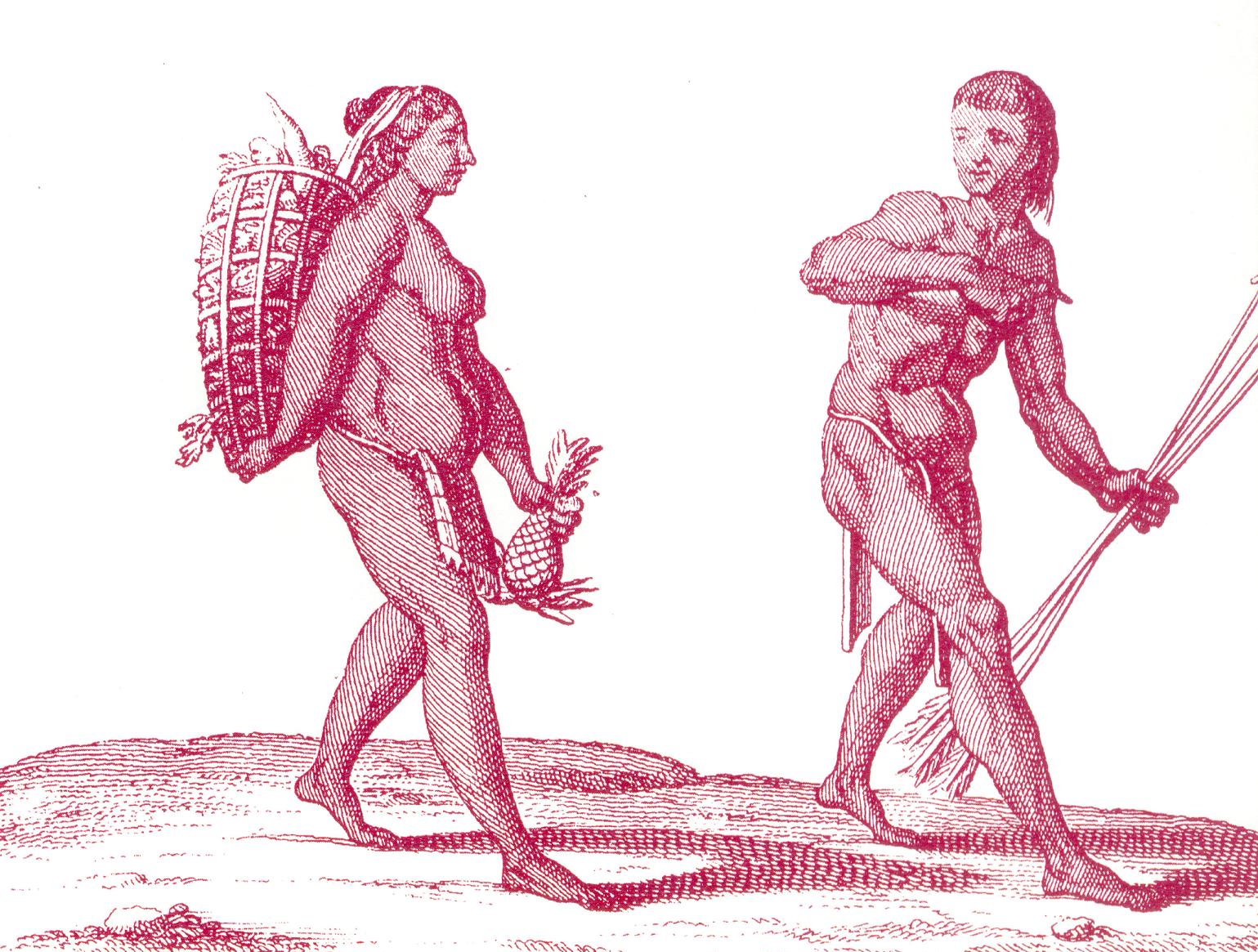
hunter-gatherers of long ago, we do not always go hunting, but we do so when we
need to, when we are hungry, curious, confused, when we are enthralled, perhaps
even when we are angry. But to gather in
anger is a task often difficult to accomplish.
And we hunt not to kill, but to learn, to learn about the lives of
others.
What is it
like to be like that person over there?
What is it like to be a woman?
What is it like to be a woman in a medieval town in what is not yet
Italy? What is it like to be a
Republican, a Republican in 2012 America, I can ask myself. A female Republican?
The word we
sometimes use for this is empathy. It is
a good word, but one we wish to improve upon.
Empathy is the ability to understand and share the
feelings of another.
But why only the feelings of another? We are
all a mix of emotions and reason.
Any why of
only another person, of an individual?
Every woman
in that medieval town is going to be a little bit different from every other
woman in that town, and she is going to be quite a lot like every other woman there.
She is tied to others by culture,
gender, ethnicity, religion, demography, family….

Now, we are called upon at times to empathize with others when
they are in trouble, when they are suffering.
Somehow the superior person empathizes with the inferior person,
or the one in a superior situation with one in an inferior situation.
Cannot the lower empathize with the higher? We have a hard time coming to grips with that
notion. Maybe we shouldn’t.
Empathy, quite simply, is putting ourselves in the shoes of
others, and walking… It is not a matter
of judging others, but of understanding them, or at least, understanding them
before judging them.
Now, at the beginning of his administration, President Barak Obama
suggested that he was looking for a Supreme Court nominee to replace justice David
Souter, a nominee who had empathy. All
hell broke loose, and Sonia Sotomayor, who became his choice, had to run away
from that term, empathy, and also from another one, from “a wise Latina,” as
she had once called herself, in public and somewhat in jest.
The law is about reason and not feelings. The law is generally about the law, and not particularly
about individual human beings.
Sotomayor would likely sympathize more with those who were
suffering than with those who were not. She
would be unbalanced. Given that she was
a woman, it might be all the more likely that her emotions would run away with
her.
In 2011 a
legal case rose to the Supreme Court.
A 13
year-old boy had been taken out of class in school by the police, interrogated,
suspected of petty larceny, not mirandized.
Should a suspect's age factor into an inquiry into whether he was “in
custody” for the purposes of a Miranda warning?
Sotomayor argued yes. She
explained that "a reasonable child subjected to police questioning will
sometimes feel pressured to submit when a reasonable adult would feel free to
go," and that—"such conclusions apply broadly to children as a class.
And, they are self-evident to anyone who was a child once himself, including
any police officer or judge."
Empathy.

Alito argued no. The law needed
to treat all suspects alike. Otherwise
the rule "will be hard for the police to follow, and it will be hard for
judges to apply." According to Dahlia Lithwik, the Slate legal
correspondent, Alito felt for the "60-year-old judge attempting to make a
custody determination through the eyes of a hypothetical, average 13-year-old."
Alito apparently couldn't imagine a 60-year-old judge in the shoes of
a teen. But he slides, Lithwik writes, into the boots of a police officer
and a judge without a pinch. Empathy.
Many of us find it easier to think of the lives of others when they
have or are less, to empathize down.
Sotomayor is thinking about someone far different from her.
Others find it easier to empathize up, toward those who have more,
wealth, authority. Alito is thinking of someone quite similar to
himself.
I strongly suspect that Sotomayor would have little difficulty
empathizing up, figuring that the 60 year-old judge would easily understand the
situation of the 13 year-old boy. I am
almost certain that Alito would also easily imagine the situation of our 13
year-old boy. Is he depriving himself of
some of his humanity by not empathizing up and empathizing down?
For some of us, our gaze moves downward; for others, it rises.
I suggest to you that this is one of the deepest divides in the human
condition.
It is not a straight line, and it is often porous. We are not always consistent. But some of us are inclined to look down, to bend
our bodies, extend our arms, open our hands, frown with concern, and seek to
embrace.
Others of us, tend more often than not, to glance upwards, to open our
mouths ever so slightly, to sigh, breath deeply, raise our arms in awe and
admiration.
One judge may look at a case and perceive that
the humiliation suffered by a 13-year-old girl during a strip search in a
school or airport is the most consequential fact of the case. Another judge may
perceive that the security of the school or airport is the most consequential
fact.
How about you?
Don’t ask yourselves now toward which side of this incomplete divide
you tend to navigate. But as you go
about your lives, look at your own maneuverings, at your body in motion.
A good judge, a decent human being, can empathize
with the many types of people and actions involved in a case, in a situation, but
a bad judge and an incomplete human being can only empathize with one type, one
ethnic group or one social class, one gender, one identity.
A study published last year in the Journal of theAssociation for Psychological Science, concluded that rich people have a more
difficult time empathizing with poor people. The rich were less empathetic, less altruistic
and more selfish than the lower classes.
The lower classes were better at reading other people’s emotions.
Now, this should not come to us as any kind of a
surprise. We can imagine that rich
people will tend to move away, shrink a bit, shudder, in the presence of a poor
person, of a homeless person, of a bag lady, of someone who has not taken a
shower in days or weeks.

And poor people often look at us in expectation, wondering
what our lives are like, scrutinizing our clothes, our cars, our jewelry, imagining
what it would be like to drive a Mercedes Benz, what it feels like to sit on
leather seats, or what it would be like to go to college. Some poor people go to college, but not
many. They look around them, intently,
asking why their boss is looking over his shoulder at them as they dip the French
fries into the hot oil.
So, that is why we are here, in college, to learn
how to look at the lives of others, to try to see what it is like to be a woman
in a medieval town in what is not yet Italy, to be a conservative and a liberal
judge on the Supreme Court, what it is like to flip burgers at McDonalds. I am assuming that few of you have done that. I have
not done that.
We are here to learn to look up and to look down,
to look carefully in both directions. It
is about the lives of others. That is
what the study of literature and sociology and psychology and anthropology and
religious studies and politics and history are in large measure all about. We are here to learn what it is like to see
the world as Sonia Sotomayor and Samuel Alito might.
We will not necessarily improve on our world with
this bifocal training, but we certainly will not be able to make it a better
one if we don’t engage in it.
One thing is for sure. We will not be lonely. When we learn the lives of others, our own lives
will be richer and wider, as we set upon our journey in the company of so many
others. Gather others; gather yourselves.
[1]
These words were originally presented orally, with bodily motions, and have here
been revised for a textual rendition.

This is beautiful! Thank you. I am going to think about those frames of empathizing up and empathizing down, and when I am doing either one. People's actions and words make a lot more sense when viewed this way.
ReplyDeleteThank you for posting this. It reminds me, eloquently, why I teach and why I write.
ReplyDelete